
The 2026 Local Business Impact Survey found 3 out of 4 small businesses are still earning at or below pre-Helene revenue. Yet, two years after Hurricane Helene, the entrepreneurs of Western North Carolina are doing what they do best: building businesses, creating opportunity, and strengthening the communities they call home.
Entrepreneurs have demonstrated remarkable resilience after navigating major disruptions. While nearly all respondents have reopened, financial recovery remains uneven as owners work through reduced tourism, constrained cash flow, rising costs, workforce shortages, and broader economic uncertainty.
Yet the story is not defined by these challenges alone. Entrepreneurs remain optimistic about the future and committed to building on the community collaboration that emerged in the wake of the storm. As this report explores, recovery is only one part of the story.
Local Business Impact Survey Webinar
RSVP to attend the webinar for more insights from the 2026 Local Business Impact Survey.
A Summary Of Key Insights
3 out of 4 businesses reported at or below pre-Helene revenues, showcasing that reopening and recovering are not the same thing.
Survey participants identified tourism as the greatest opportunity for strengthening small businesses across Western North Carolina. Entrepreneurs highlighted the importance of continued collaboration and connection across the small business community.
According to survey respondents, inflation, rising costs, and recession concerns now rank as greater perceived threats to small business success than Hurricane Helene.
Entrepreneurs supported by Mountain BizWorks reported creating and retaining more than 6,000 jobs across the region, including 1,833 new jobs, while launching 173 new businesses in the past year.
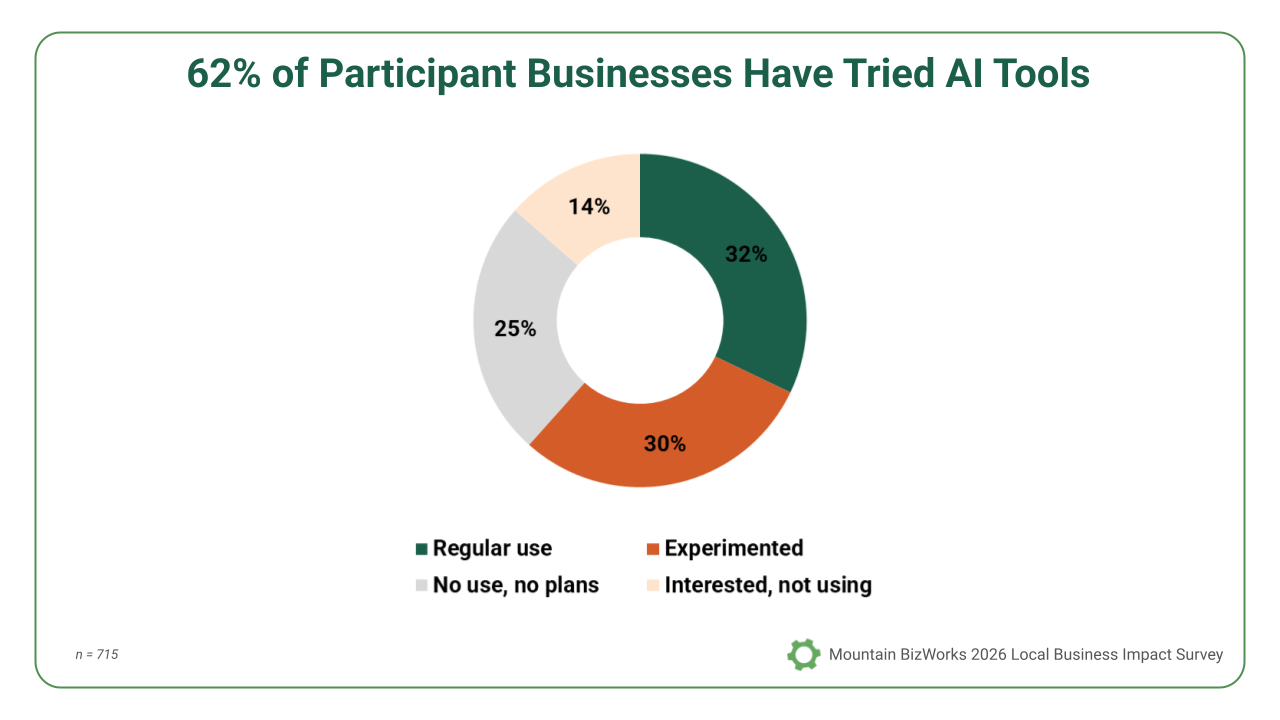
62% of those small business owners who took the survey have experimented with AI, and 32% reported using it regularly within their work.
Part I: Rebuilding Revenue Remains One of the Biggest Challenges Facing Small Businesses Today
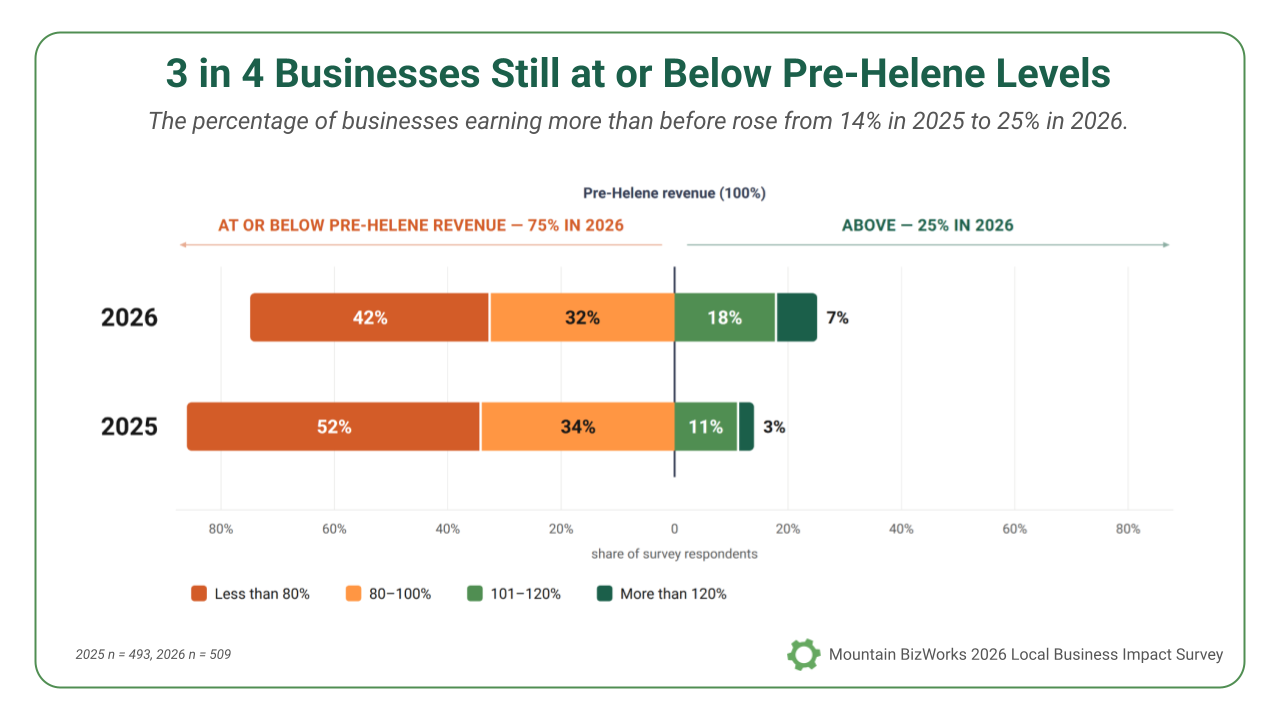
3 in 4 Businesses Reported They are Still at or Below Pre-Helene Revenue Levels
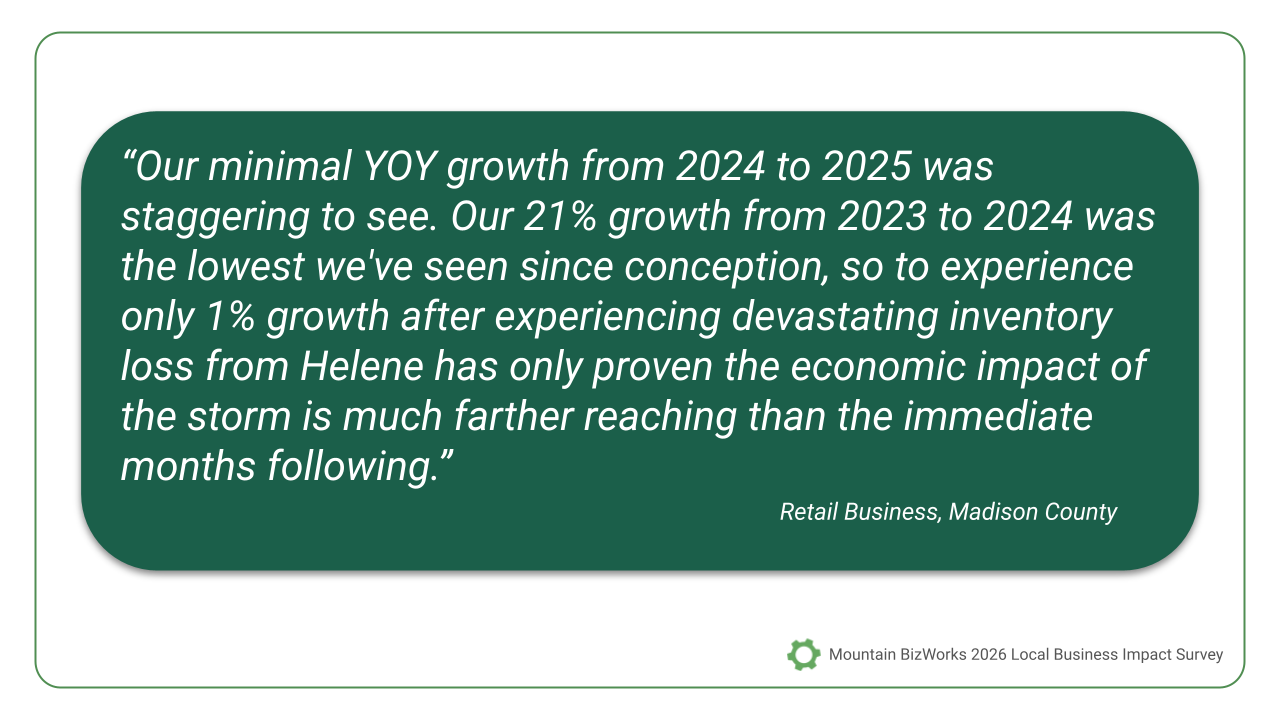
While most businesses across the region have reopened, revenue tells a different story. Three out of four survey respondents are still earning at or below what they were before Hurricane Helene. Nearly half remain below 80% of their pre-storm revenue, highlighting the gap between reopening and returning to previous levels of economic stability.
Across geographies and sectors, many small businesses continue to share the lasting financial impact of the storm and the broader economic pressures that have followed. At the same time, we are encouraged to see that the number of businesses now reporting revenues above pre-Helene levels has nearly doubled from last year. While this is a positive sign that momentum is building, only about 25% of businesses reported reaching this milestone, highlighting that many entrepreneurs still have a long way to go in their recovery journey.
Small Businesses Continue to Navigate the Compounding Effects of COVID-19 and Hurricane Helene
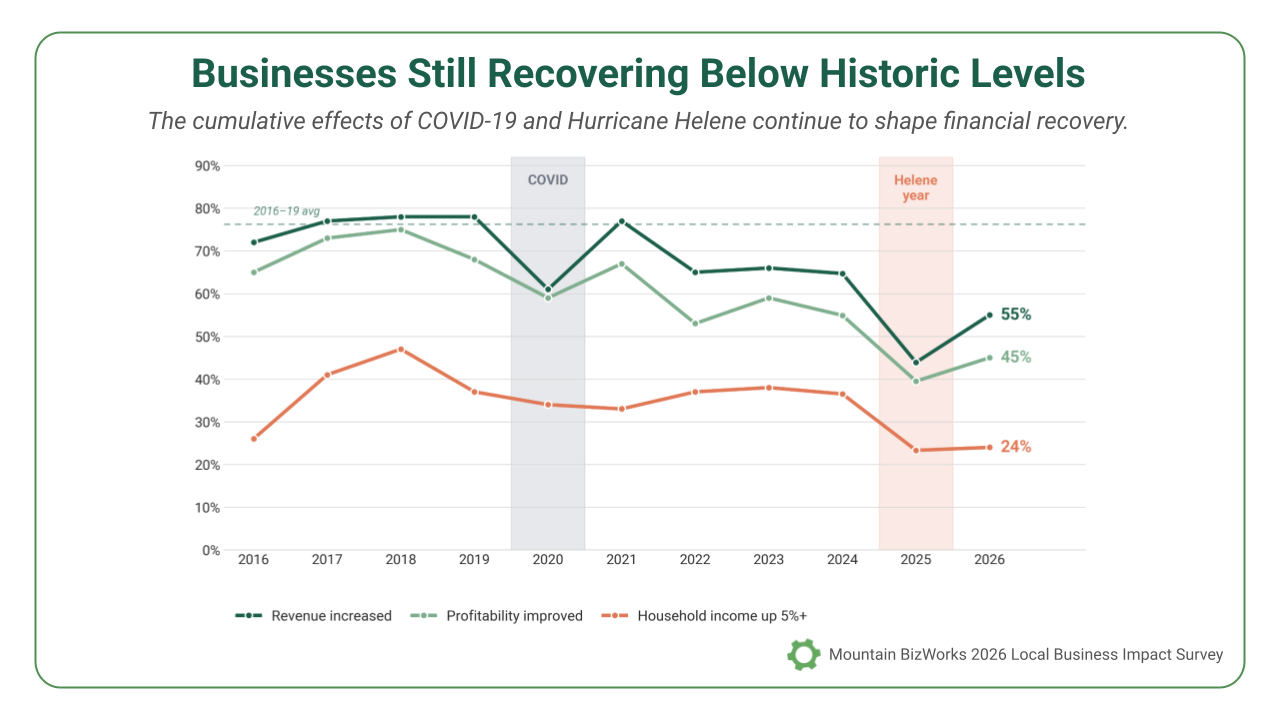
For eleven years, Mountain BizWorks has surveyed clients to understand how small businesses are growing. We look at revenue, profitability, and the impact that growth has on entrepreneurs and their families. One measure of economic mobility and generational wealth-building we track is whether business owners have increased their household income by 5% or more over the past twelve months. This indicator helps us estimate the financial progress among the entrepreneurs we serve.
It is important to recognize that small businesses have faced not one, but two incredibly disruptive events over the past six years: COVID-19 and Hurricane Helene. While we saw increases in revenue, profitability, and a modest increase in household income following COVID-19, those gains began to decline in the years that followed. Then, Helene brought another sharp revenue drop in 2024 and 2025.
The chart below illustrates this trajectory. While businesses are beginning to recover from the impacts of Helene, survey respondents have not reported a full recovery to pre-COVID levels. Many businesses entered the Helene recovery period still carrying the effects of the pandemic, making the path back to stability even more complex.
Reduced Tourism and Customer Traffic Named as the Greatest Barriers to Recovery
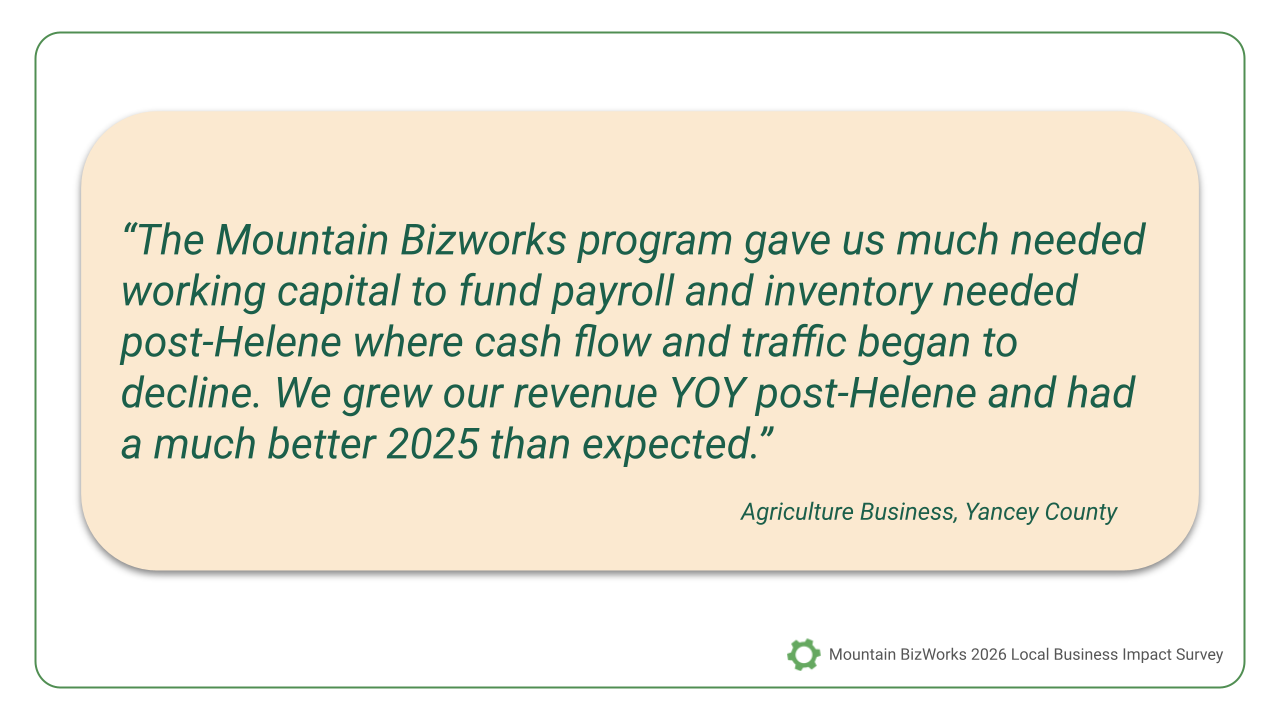
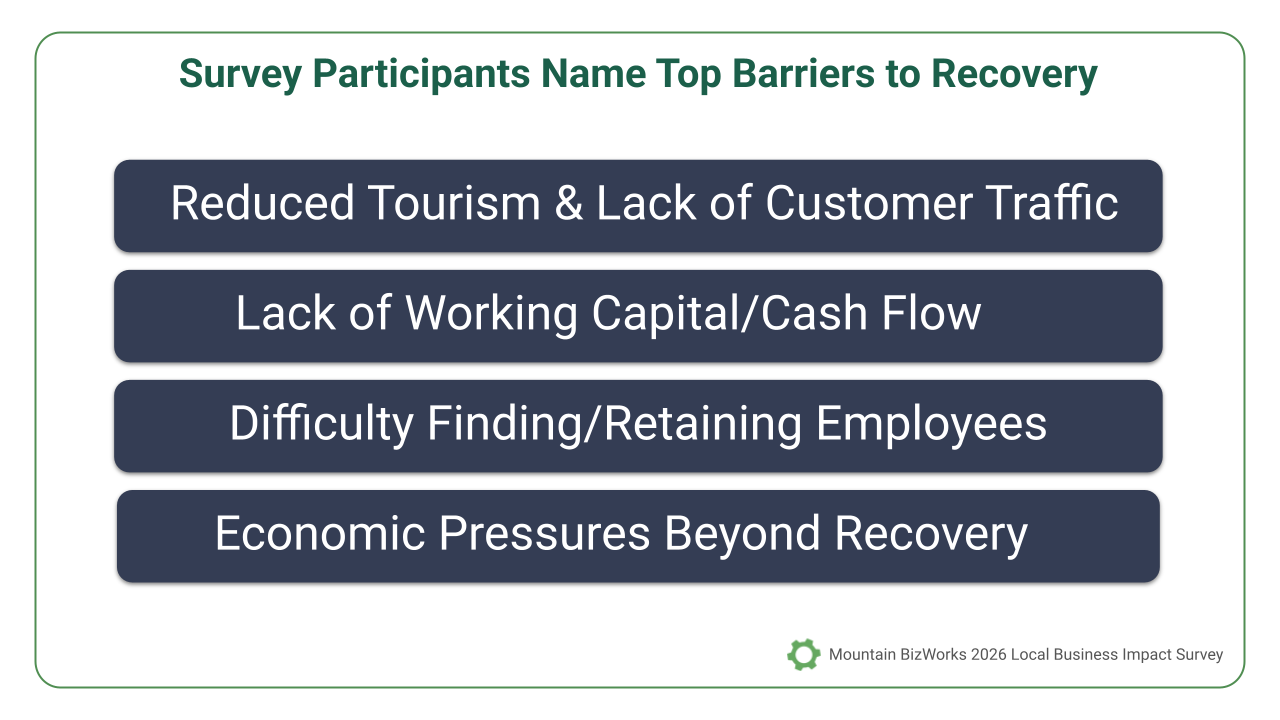
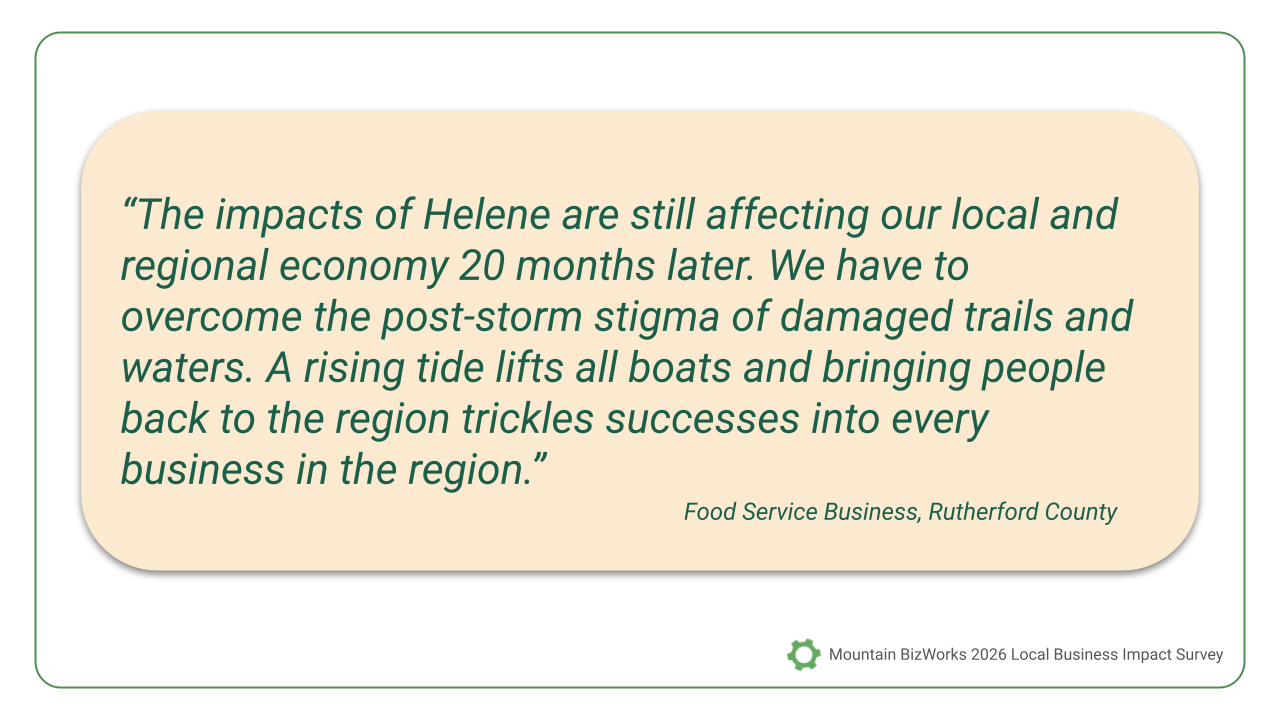
Survey respondents highlighted the impact of reduced tourism and customer traffic among Western North Carolina’s small business community. Tourism is deeply connected to the economic vitality of the region, particularly during the high seasons of summer and fall. For many businesses, particularly those in hospitality, retail, food, and outdoor recreation, cyclical visitor spending is a critical driver of success. Yet tourism touches nearly every sector, and even fully operational businesses continue to feel the impact when visitor traffic has not returned to previous levels.
Beyond customer traffic, businesses are also navigating cash flow constraints, difficulty finding and retaining employees, and broader economic pressures. Together, these challenges reflect a shift in what recovery looks like for small businesses today. While the immediate impacts of the storm have eased for some, entrepreneurs are now navigating the longer-term work of rebuilding revenue, maintaining operations, and adapting to a changing economic environment.
Despite Ongoing Challenges, Entrepreneurs Remain Confident in Recovery
Confidence in recovery is translating into increased demand for capital. While 80% of respondents indicated they are confident in their ability to fully recover, nearly 7 out of 10 believe they will or may need capital in the next year to support that recovery and continue moving forward. Most anticipate needing less than $100,000 in funding, while more than 26% of survey participants anticipate needing between $100-$250,000 in capital to support their recovery and growth.
The intended use of those funds reinforces the idea that businesses are looking beyond survival. Entrepreneurs identified working capital and growth opportunities as their top priorities, followed by investments in marketing and equipment. They also shared needs for inventory, debt refinancing, commercial real estate, startup costs, and business acquisition. These findings highlight the importance of accessible, flexible capital that allows entrepreneurs to strengthen operations, invest in growth, and pursue new opportunities.
Part II: Beyond Recovery: The Road Ahead for Small Businesses
Survey Participants Identified Opportunities to Shape the Next Chapter for Small Businesses Across WNC
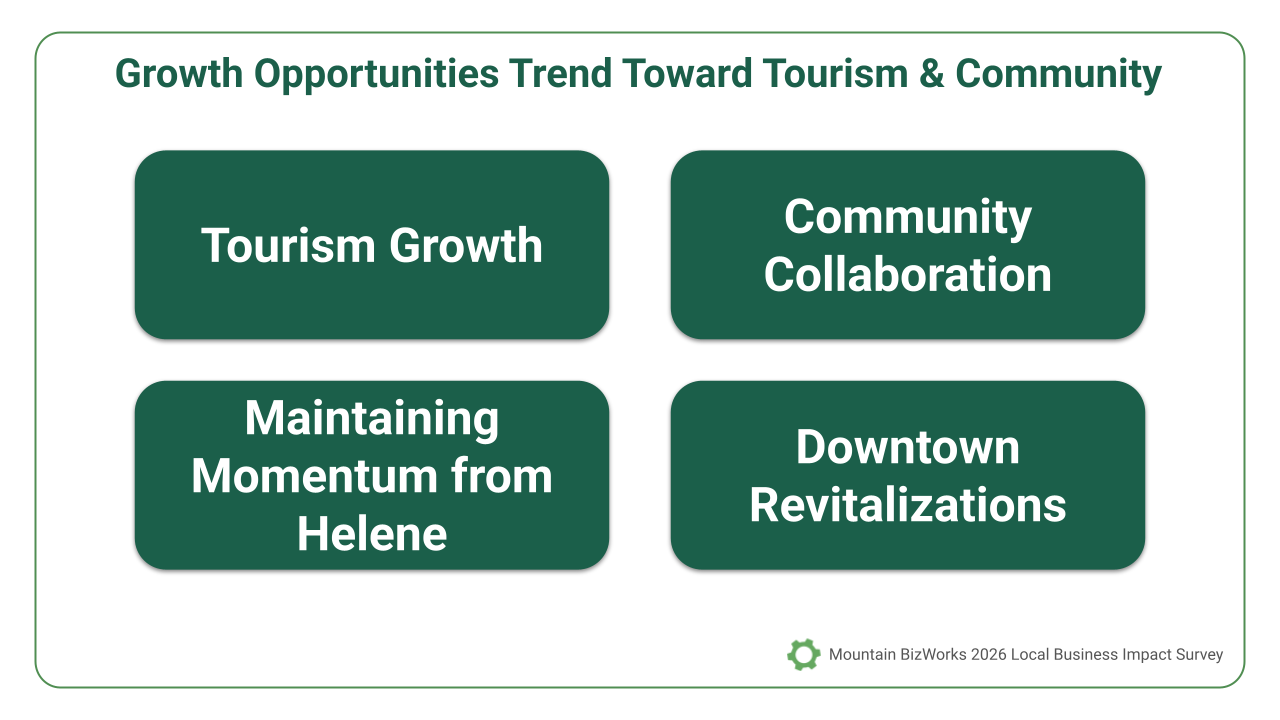
When asked where they see the greatest opportunities, many respondents highlighted the importance of tourism in our region. Survey participants recognize that a strong visitor economy has ripple effects throughout nearly every sector. It brings customers back to downtowns, supports local supply chains, and drives revenue for businesses across the region.
Regional TDAs, Main Street programs, downtown associations, and local business owners have come together to support recovery efforts, promote local businesses, and help reconnect communities with visitors.
One of the positive outcomes from the response to Hurricane Helene has been the continued collaboration among organizations and entrepreneurs working together to support the region’s small businesses. Survey participants expressed a desire to maintain these connections and continue working collaboratively, with a focus on downtown revitalization, regional economic recovery, and strengthening the small business ecosystem across Western North Carolina.
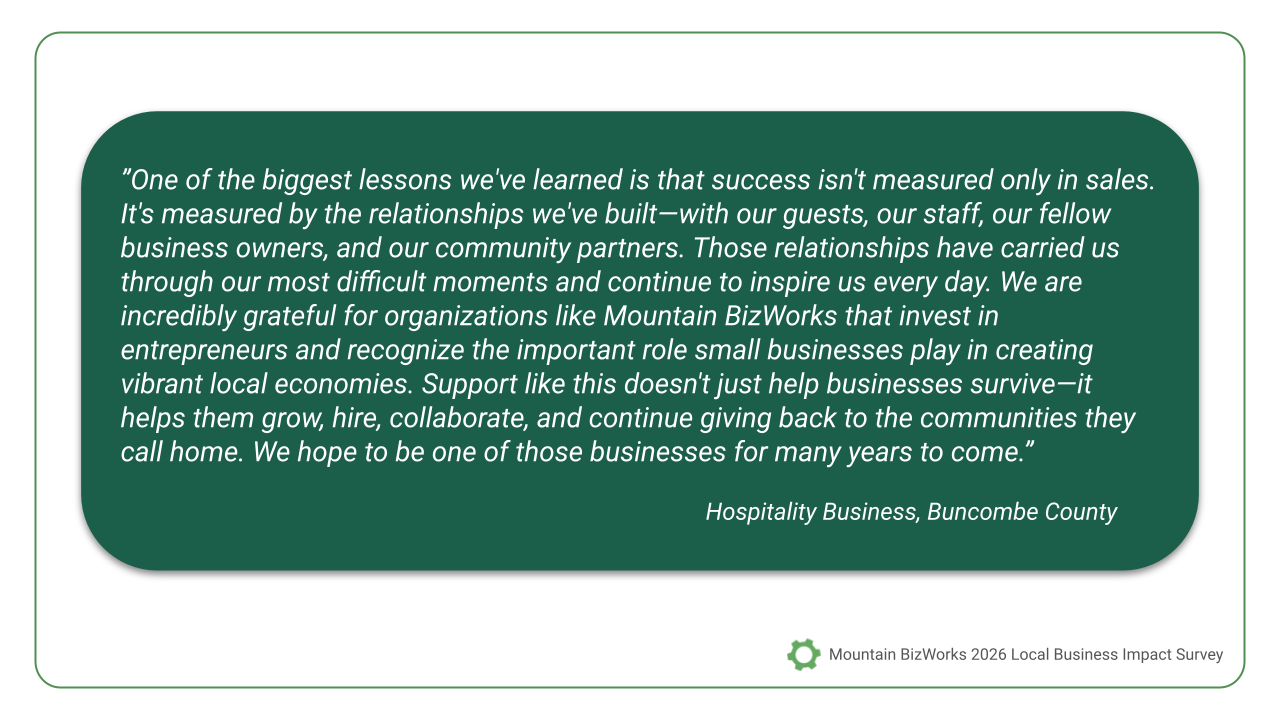
Campaigns such as Go With a Guide, along with efforts led by partners including Visit NC and Explore Asheville, reflect this collective effort to highlight the experiences, destinations, and small businesses that make Western North Carolina unique and encourage visitors to return.
Small Businesses Navigate Compounding Economic Pressures
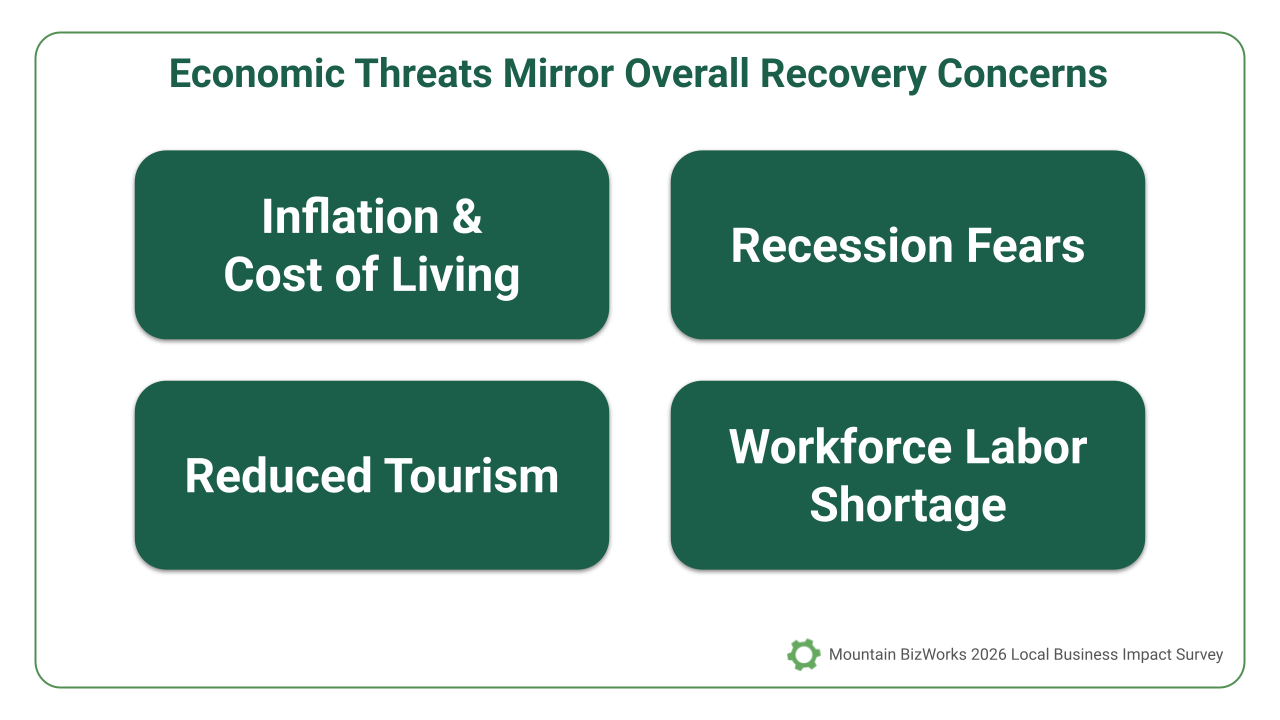
According to survey respondents, inflation, rising costs, and recession concerns now rank as greater perceived threats to small business success than Hurricane Helene. These findings highlight the layered challenges entrepreneurs are navigating as they continue to recover from Helene while also managing broader economic pressures impacting their businesses.
Beyond economic uncertainty, survey respondents identified workforce challenges, including finding and retaining employees, along with shifting customer demand and increased operating costs as ongoing barriers to growth. For many businesses, recovery is not occurring in isolation, entrepreneurs are rebuilding revenue and strengthening operations, while navigating a more complex and uncertain economic environment.
Together, these pressures are shaping how small businesses make decisions about hiring, investment, and growth. While many entrepreneurs remain focused on moving forward, they are doing so while balancing the continued impacts of recent disruptions with the realities of today’s economy.
Part III: AI Use in Small Businesses Across WNC
The Local Business Impact Survey helps us understand how small businesses are evolving, from long-term trends to the issues currently shaping the day-to-day experience of entrepreneurs across Western North Carolina. This year, we included new questions around artificial intelligence usage to better understand how business owners are engaging with this emerging technology. The results offer an early look at a region in early stages of adopting AI tools.
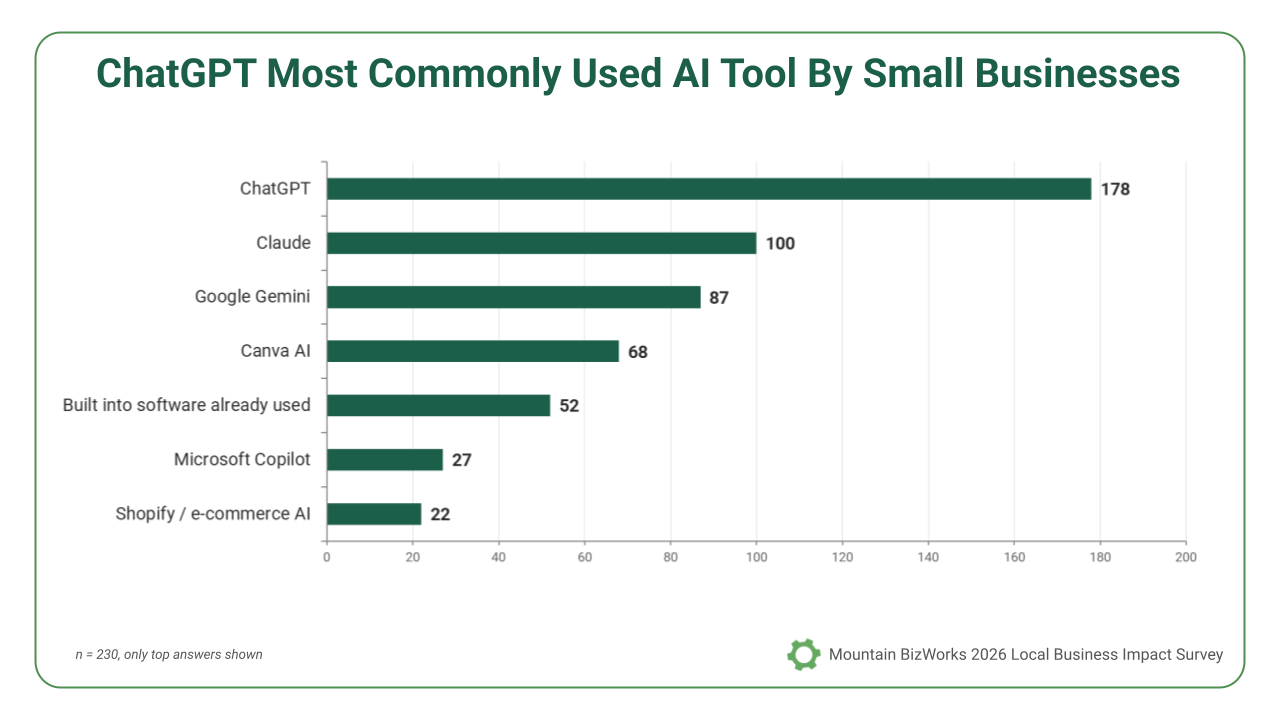
More than 60% of participants shared that they regularly use or are experimenting with tools like ChatGPT or Claude, and one-third use them regularly. One-quarter of respondents reported they are not using AI tools and have no plans to begin.
How Small Businesses are Using AI Tools
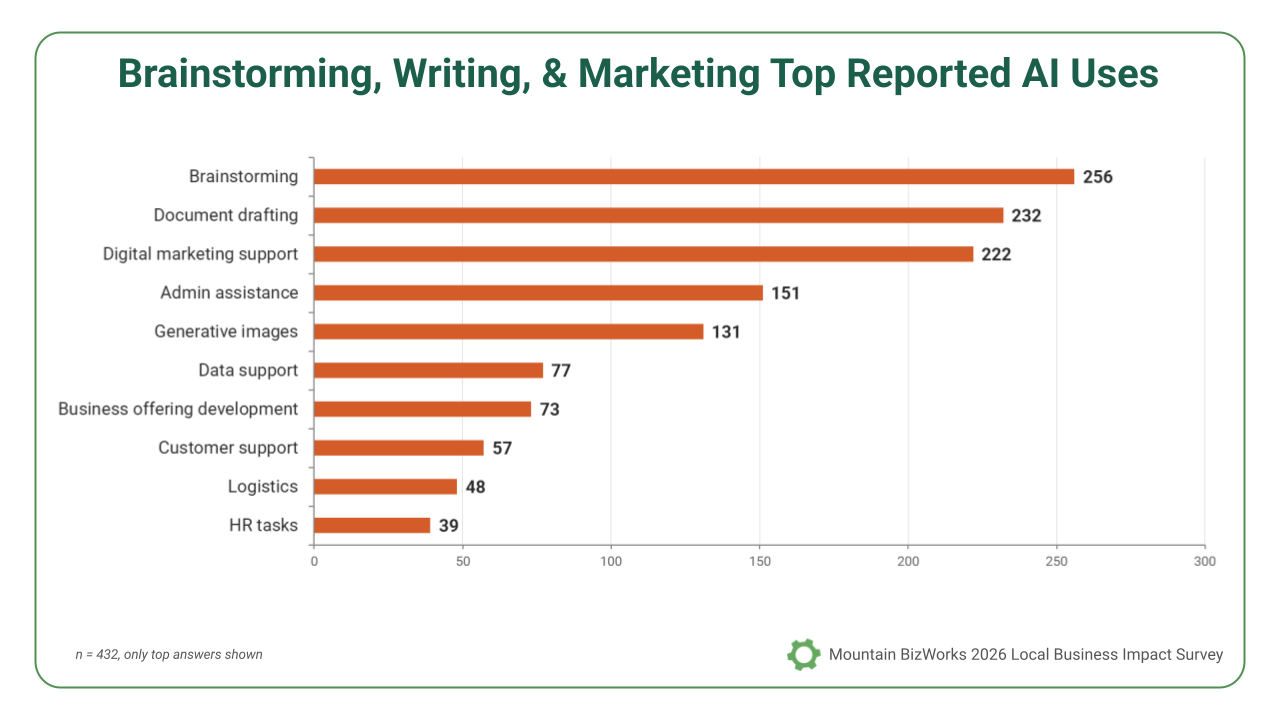
We also asked how respondents are using these tools in their businesses. Many responses showed AI tools are being used as thought partners. Entrepreneurs are using them to brainstorm ideas, organize information, summarize content, support marketing efforts, and move work forward more efficiently. These early uses show that AI tools are helping save time, work through challenges, and manage the many demands of running a business.
Based on our survey responses, adoption remains concentrated in creative and administrative tasks. Fewer businesses are currently using programs for areas such as customer service, logistics, HR, data analysis, or other operational functions.
Emerging Trend: A Mix of Early Adoption & Concerns With AI Tools
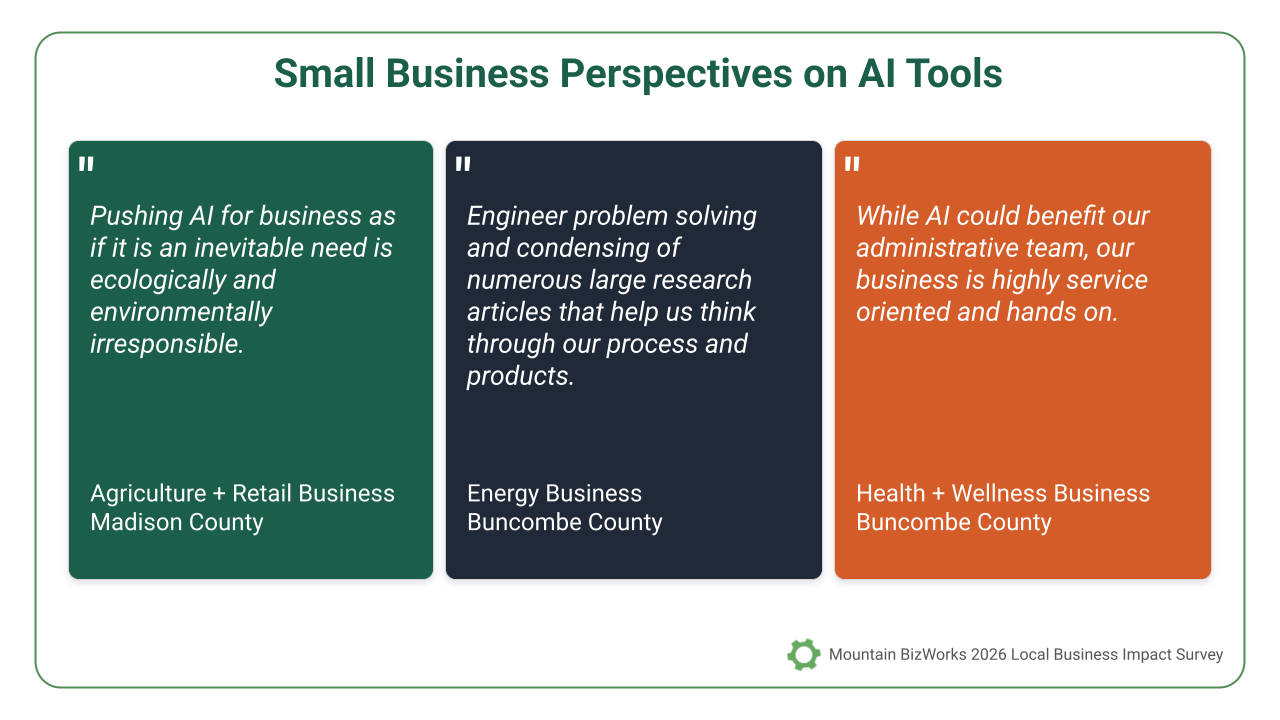
Those surveyed expressed a wide range of perspectives about AI programs, reflecting both curiosity and caution about how this technology fits into their businesses. Many described AI tools as valuable resources for research, brainstorming, drafting, and working through complex problems. These entrepreneurs seem to see AI as another tool in their toolbox.
Others approached AI tools and their complexities more cautiously, recognizing that its role may look different depending on the type of business they operate. For businesses built around personal relationships, hands-on service, craftsmanship, or creative work, some owners questioned where AI fits and what it can, and cannot, replace. Others raised broader questions around authenticity, environmental impact, and the long-term implications of rapidly changing technology.
An Opportunity for Learning
One of the clearest opportunities identified through this year’s survey is helping entrepreneurs better understand when and how AI can support their businesses. Nearly two-thirds of respondents indicated they would be interested, or may be interested, in training on how AI tools can be used in their work.
For Mountain BizWorks and other entrepreneurial support organizations, this creates an opportunity to meet business owners where they are. Some entrepreneurs are just beginning to experiment with AI, while others are looking to deepen their understanding and explore how these tools can move beyond content creation to improve efficiency.
The opportunity is to help entrepreneurs understand where AI can add value, where a human touch remains essential, and how these tools can become another resource to support their businesses.
Part III: Small Businesses Remain at the Heart of Western North Carolina’s Economy
Entrepreneurs Continue to Create Jobs, Grow Businesses, and Contribute to a Stronger Regional Economy
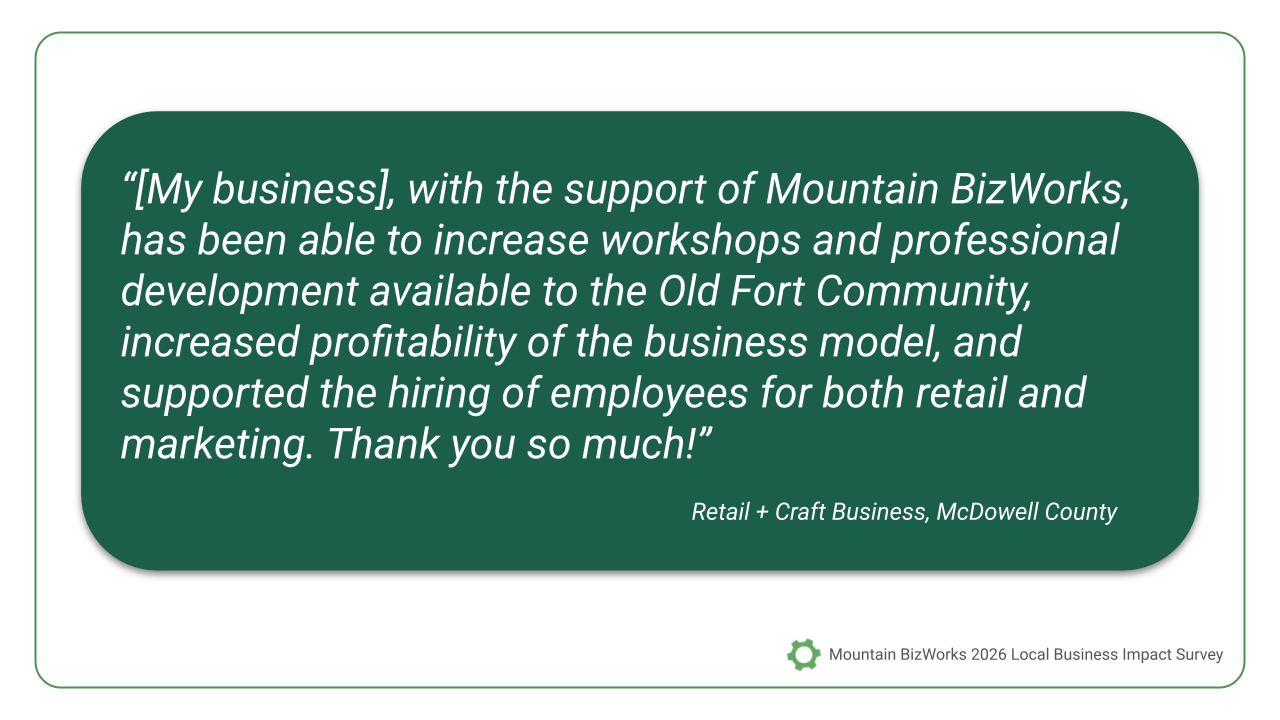
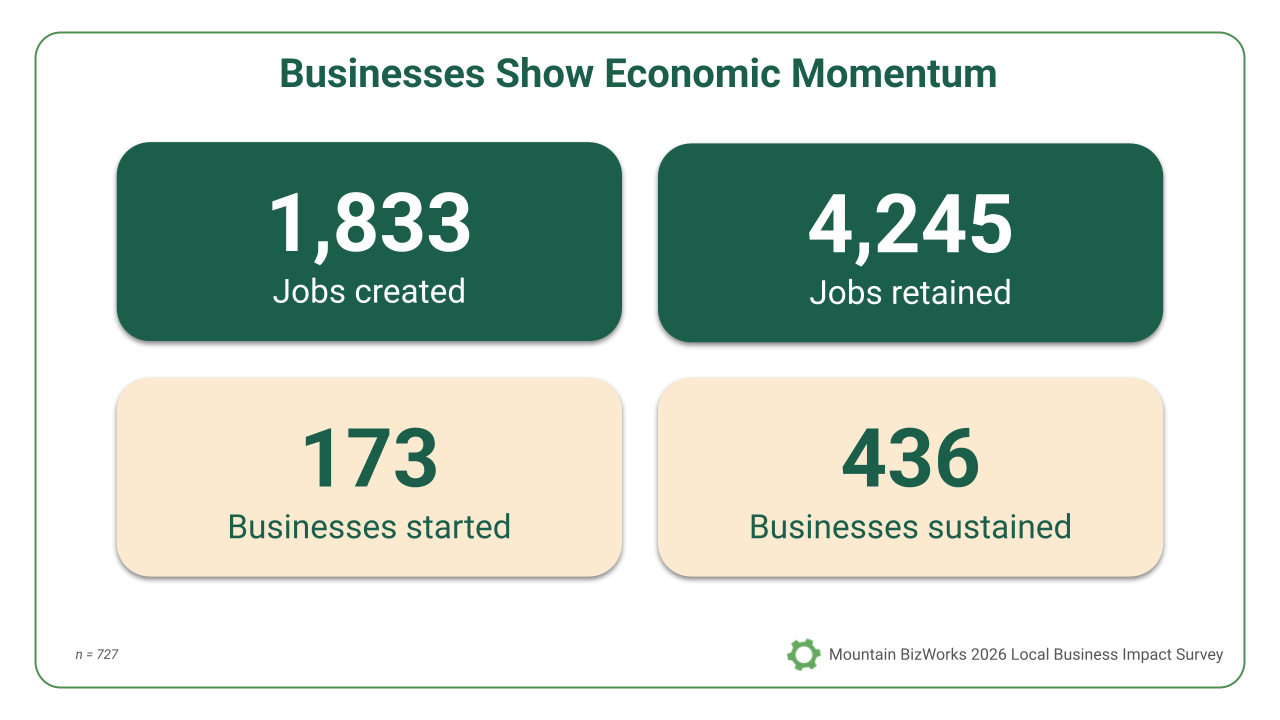
The entrepreneurs Mountain BizWorks serves continue to play an important role in the regional economy. Behind every business launched and every job created is an entrepreneur building opportunity, creating local impact, and contributing to stronger communities across Western North Carolina. Across this year’s respondents, Mountain BizWorks-supported businesses created and retained 6,078 jobs, with an additional 549 open positions actively being hired for. Survey participants reported that over the past year, 173 businesses opened with support from Mountain BizWorks services, while 436 businesses were sustained.
More new business applications were filed in 2025 than ever before in North Carolina, mirroring the surge in small business formation seen following COVID-19. Together, these data indicate that entrepreneurs continue to create opportunity even amid significant economic challenges, reflecting the resilience of WNC communities.
A Shared Path Forward: Small Businesses Shaping the Future of WNC
The 2026 Local Business Impact Survey provides a powerful snapshot of a small business community that continues to navigate significant challenges while demonstrating remarkable resilience and adaptability. Entrepreneurs reported that recovery remains complex, with many businesses still rebuilding revenue, managing rising costs, and responding to a rapidly changing economic environment.
At the same time, small businesses continue to be a driving force in Western North Carolina’s local economy. Survey respondents highlighted opportunities around tourism, collaboration, and innovation, while reporting continued job creation, new business starts, and investments in their communities.
These findings reinforce that the future of the region’s economy depends on the strength of its entrepreneurs. Continued investment, connection, and support will be essential as small businesses move from recovery toward long-term stability and growth.
Survey Participation
Annually we survey local business owners who were engaged with Mountain BizWorks over the past 12 months with a loan, a class, business coaching, or other program. This year’s survey pool also included those who received Helene recovery assistance from the Helene Business Recovery Fund, the Rebuilding Together and Recover Forward Grant Funds.
We are deeply grateful to the more than 700 small business owners from across Western North Carolina who took the time to participate in this year’s survey. Their experiences continue to provide invaluable insight into the opportunities, challenges, and evolving needs of our region’s entrepreneurial community.
Resources for Every Stage of Business
Over the next two years, Mountain BizWorks is providing resources and funding to support entrepreneurs at every stage of business as they navigate long-term recovery, resilience, and growth.
In October 2025, we launched WNC Strong: Recover Forward with support from dedicated funders and partner organizations. The program gives Helene-impacted and new small businesses access to affordable courses and free coaching through 2027.
Scholarships for Courses
Eligible businesses receive 80% off most courses and workshops. Explore the full Trail Map of options to gain knowledge and a network within supportive, peer-based learning cohorts.
Free 1:1 Business Coaching
If you need personalized support, our coaching model matches you with someone who’s lived the entrepreneurial journey. Most coaches are, or have been, small business owners themselves. Any WNC business owner can apply for 10 hours of free coaching guidance.
These Recover Forward program benefits are available for anyone in WNC at any stage of business, and no one will be turned away for lack of funds.
Recover Forward ResourcesAccess to Capital
Mountain BizWorks specializes in providing financing to help Western North Carolina small businesses start, grow and thrive. We offer non-traditional loans from $1,000 to $500,000, with lending decisions made locally by a team that understands the entrepreneurs and communities we serve.
Get Funding
Ownership Transition & Acquisition Support
Mountain BizWorks supports entrepreneurs not only in starting and growing businesses, but also in expanding local ownership through business transitions and acquisitions. As more business owners prepare for transition, these resources help preserve local businesses, support new pathways to ownership, and strengthen the long-term vitality of communities across Western North Carolina.
Valuations & Succession Planning
Whether you are exploring business ownership, preparing to sell, or navigating a transition, Market Advisors provides the guidance and support to help you plan ahead, understand your options, and move forward with confidence.
Interested in Buying a Business?
The Business Buyer Accelerator helps aspiring and current entrepreneurs explore the path to business ownership through acquisition. This eight-week program provides participants with the tools, knowledge, and guidance needed to evaluate opportunities, understand the acquisition process, and move toward successful ownership transitions.
Thank You
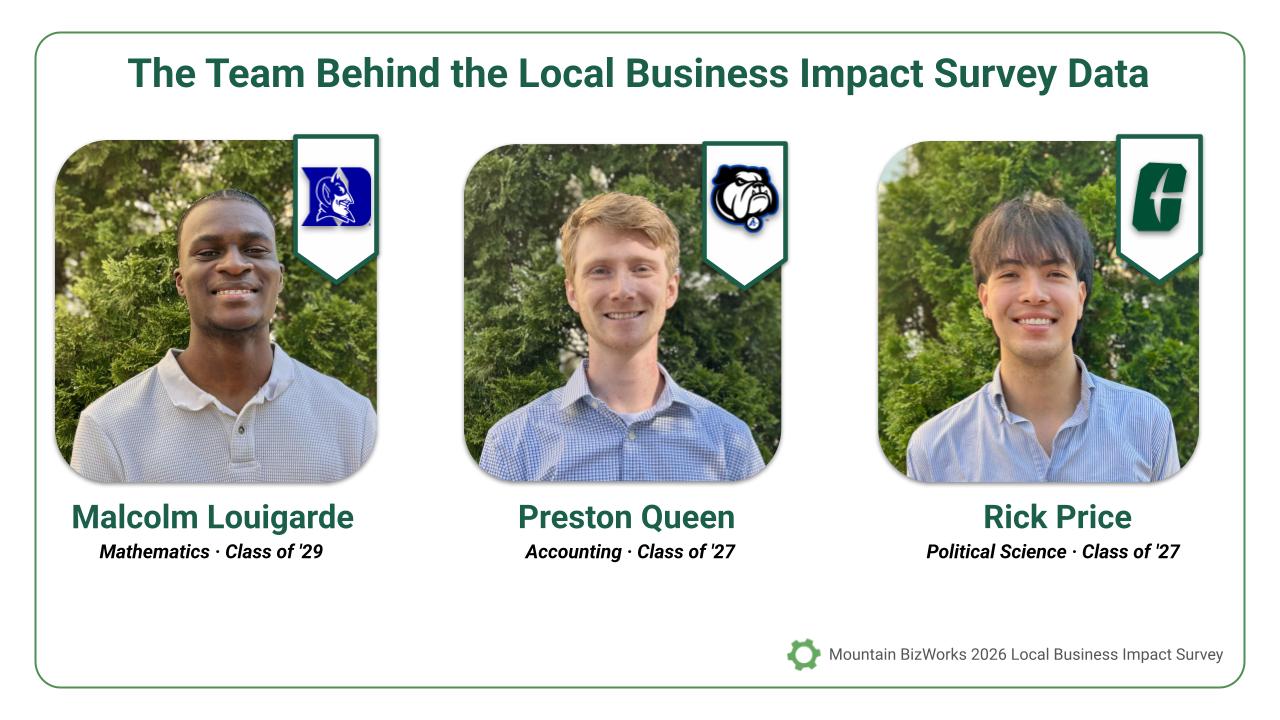
Thank you to our incredible interns, Malcolm Louigarde from Duke University, Preston Queen from UNC Asheville, and Rick Price from UNC Charlotte, who supported this project as interns through the Z. Smith Reynolds Foundation, North Carolina Network of Grantmakers, State Employee Credit Union, and Duke University. Without these partners, this work would not have been possible.
 We would also like to thank the Mountain BizWorks team, whose commitment to creating a more vibrant and inclusive entrepreneurial community remains at the core of the work we do every day.
We do not do this work alone, but in partnership with our peer small business resource partners, TDAs, Main Street Offices, local Economic Development leaders, Chambers and so many others across the region.